WULU
Changing minds with a conversation
VISION
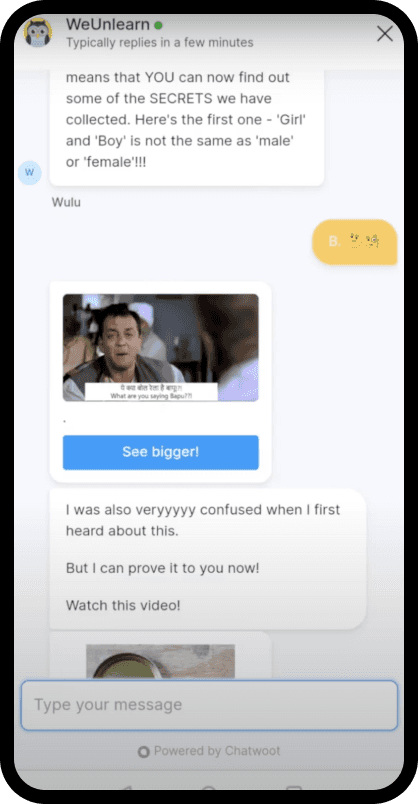
A gamified conversational learning agent ethically designed for adolescents, built to work across familiar platforms, support low-friction participation, and make sensitive content easier to understand through short, guided interactions.
HIGHLIGHTS
Ethically designed.
Tailored for Indian adolescents.
Cross-platform deployment
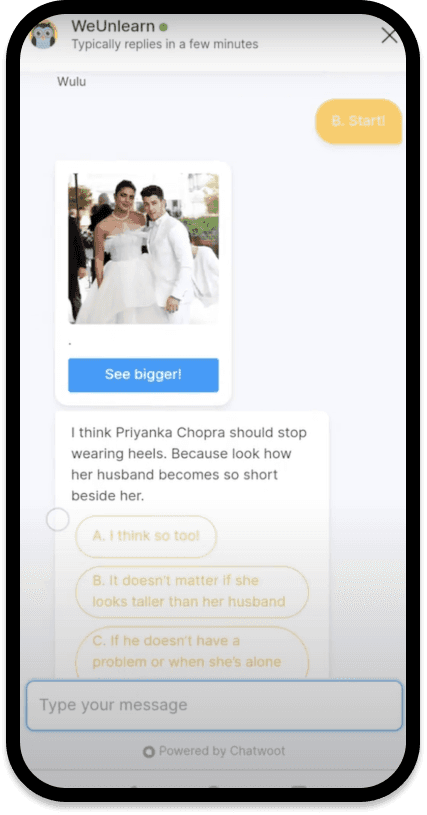
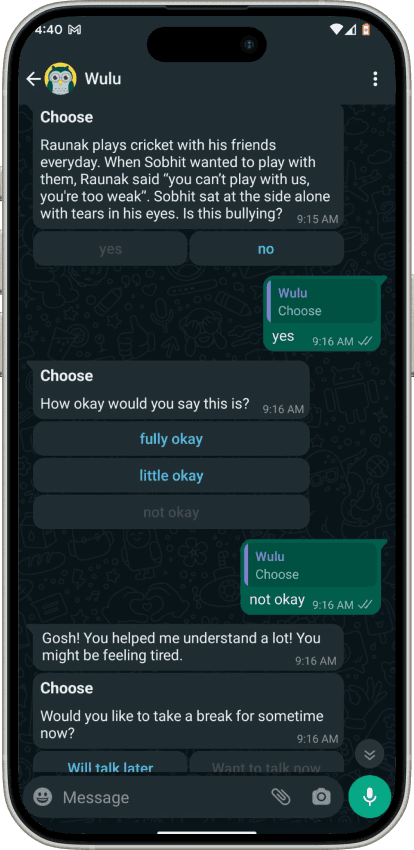
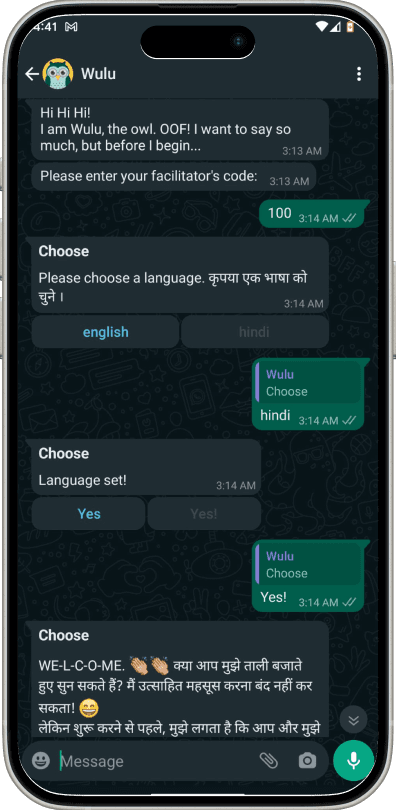
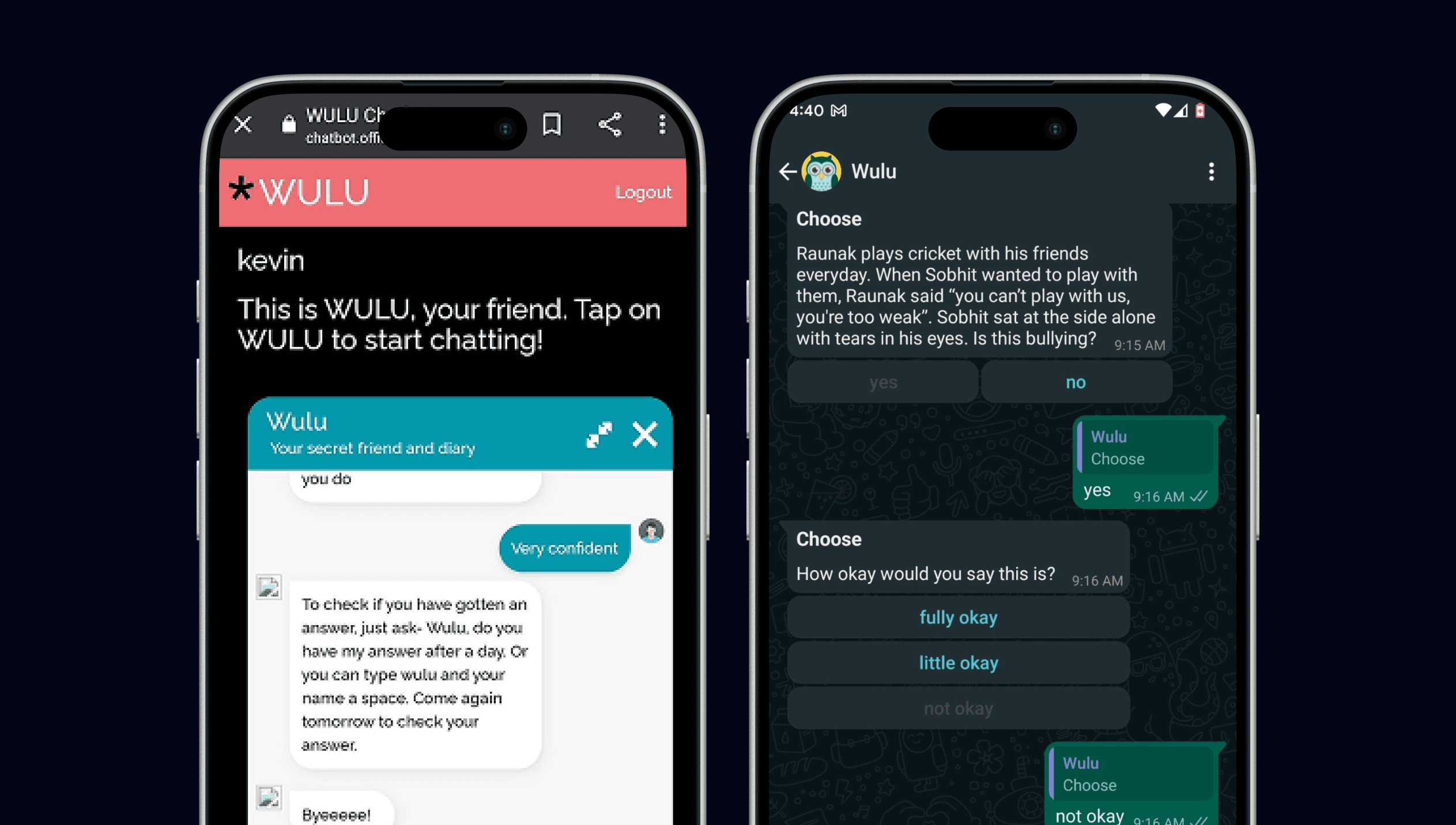
The chatbot was prototyped on Whatsapp and on a website through a chatbot widget.
Guided conversation design
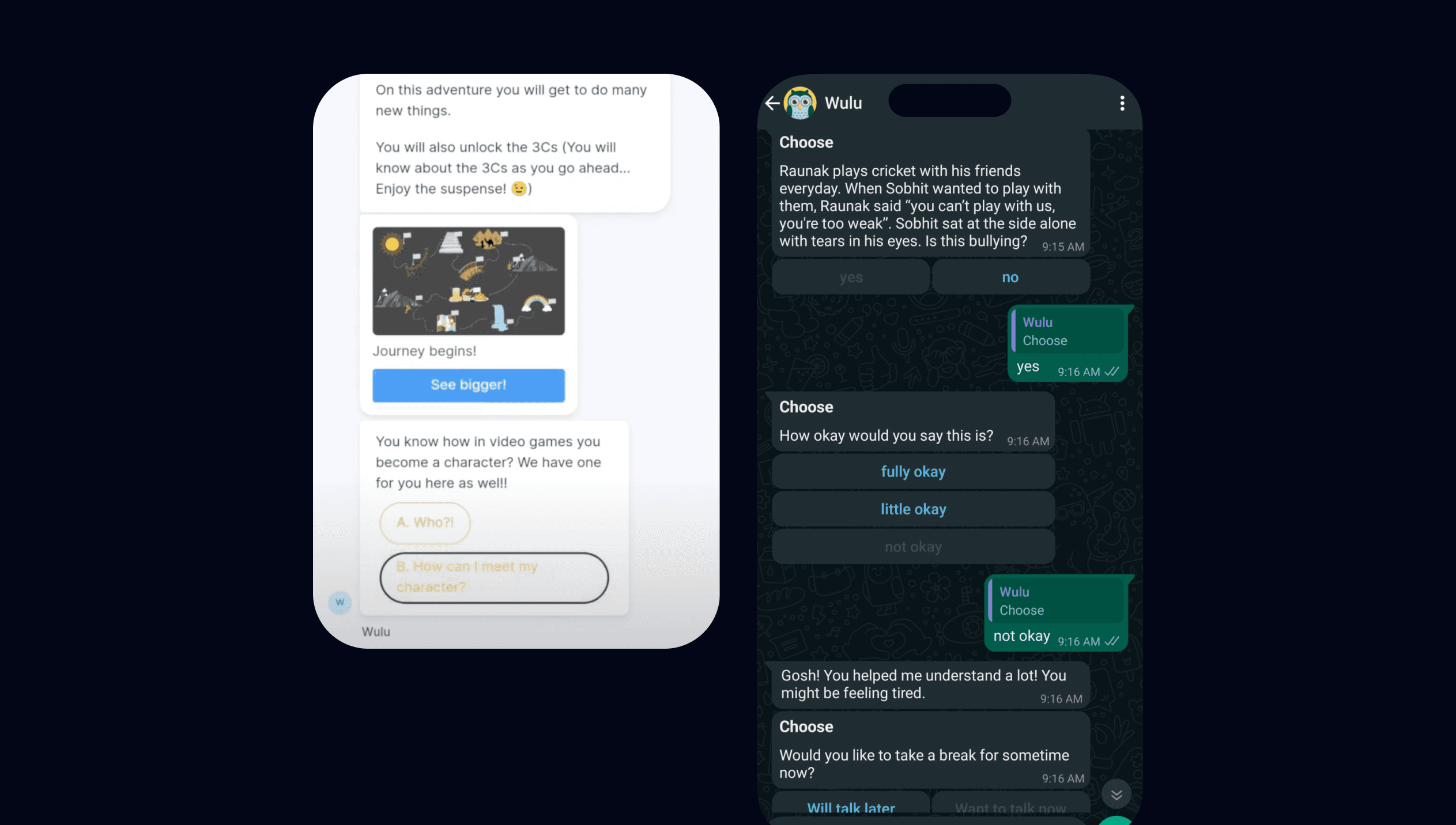
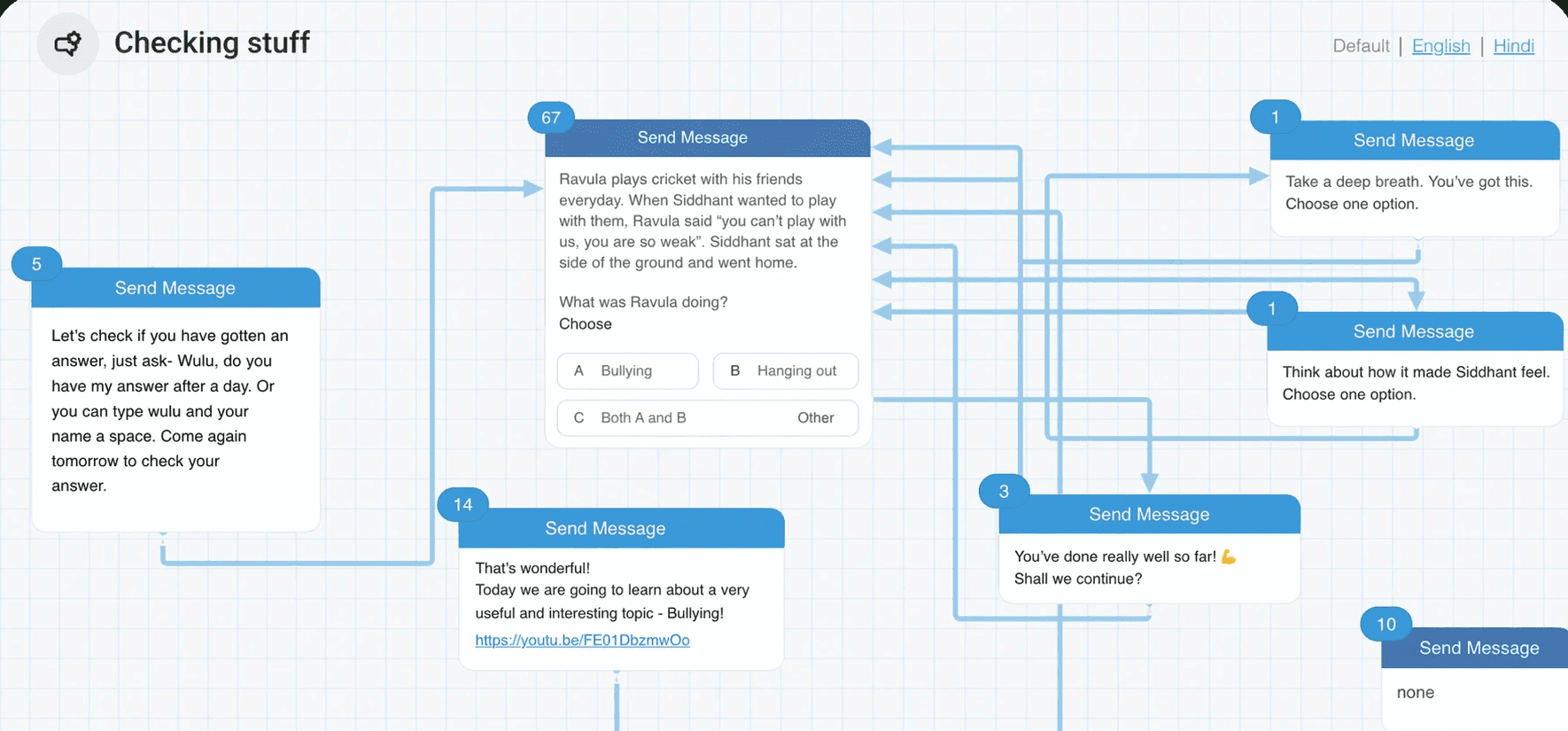
Conversation flows were kept narrow and structured, with user responses shaping the next step.
Nudge-based re-engagement
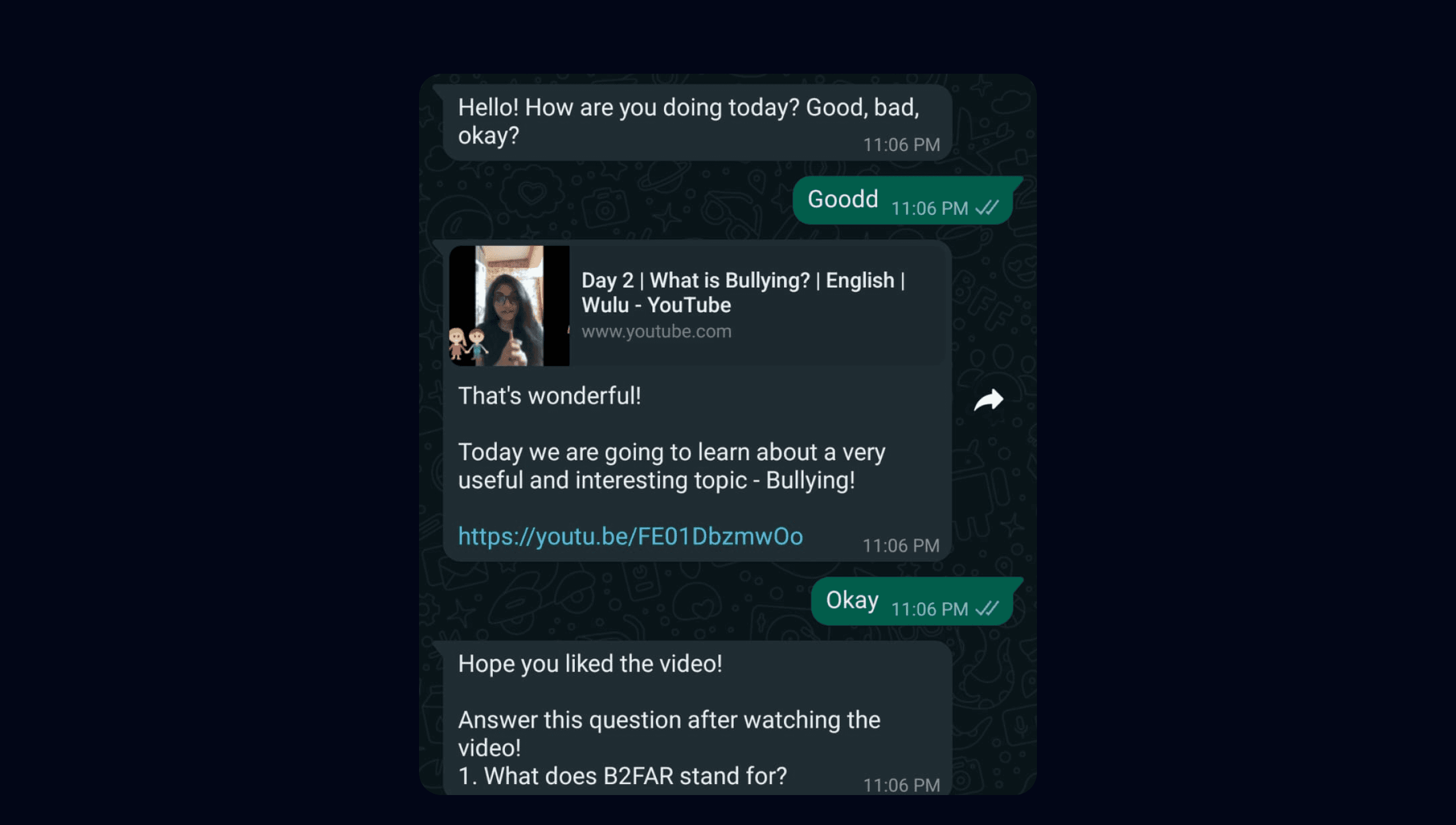
Whatsapp supported reminders that encouraged users to return after inactivity.
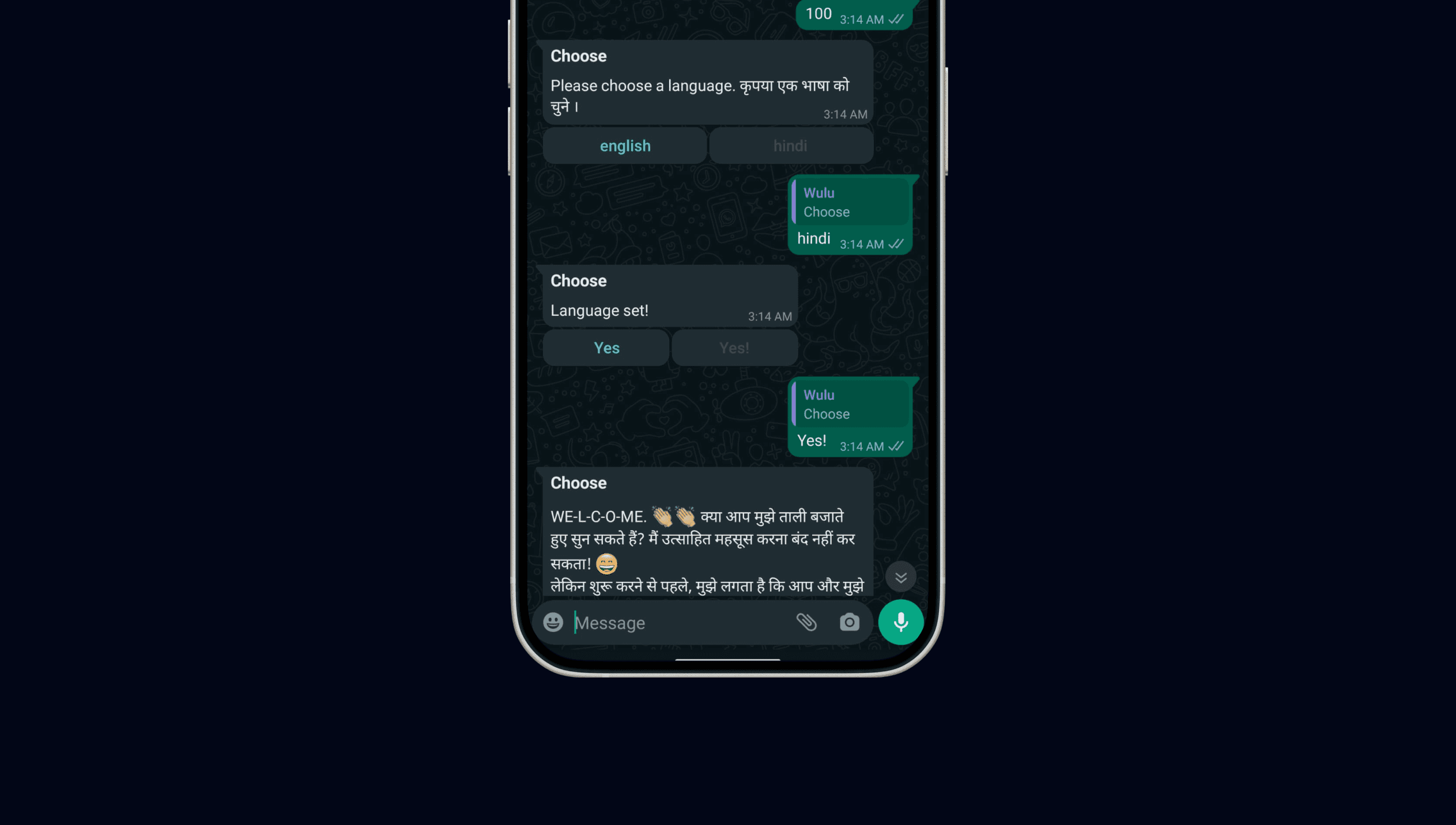
Relatable, multilingual content
Content was adapted into more familiar formats, including local language support and image-led communication.
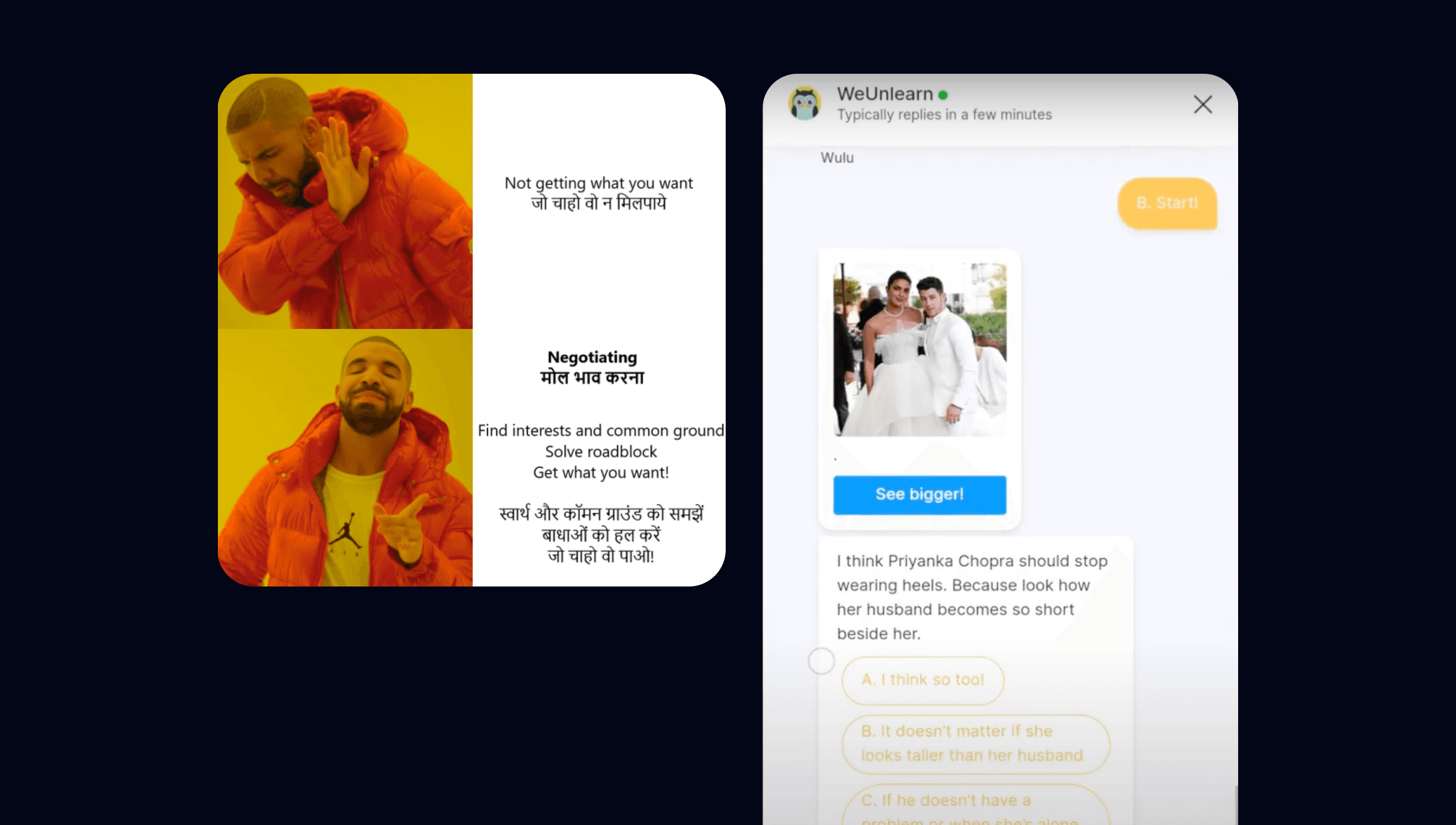
Short-form educational delivery
Multiple-choice questions, short videos, infographics, and quick understanding checks reduced effort during learning.
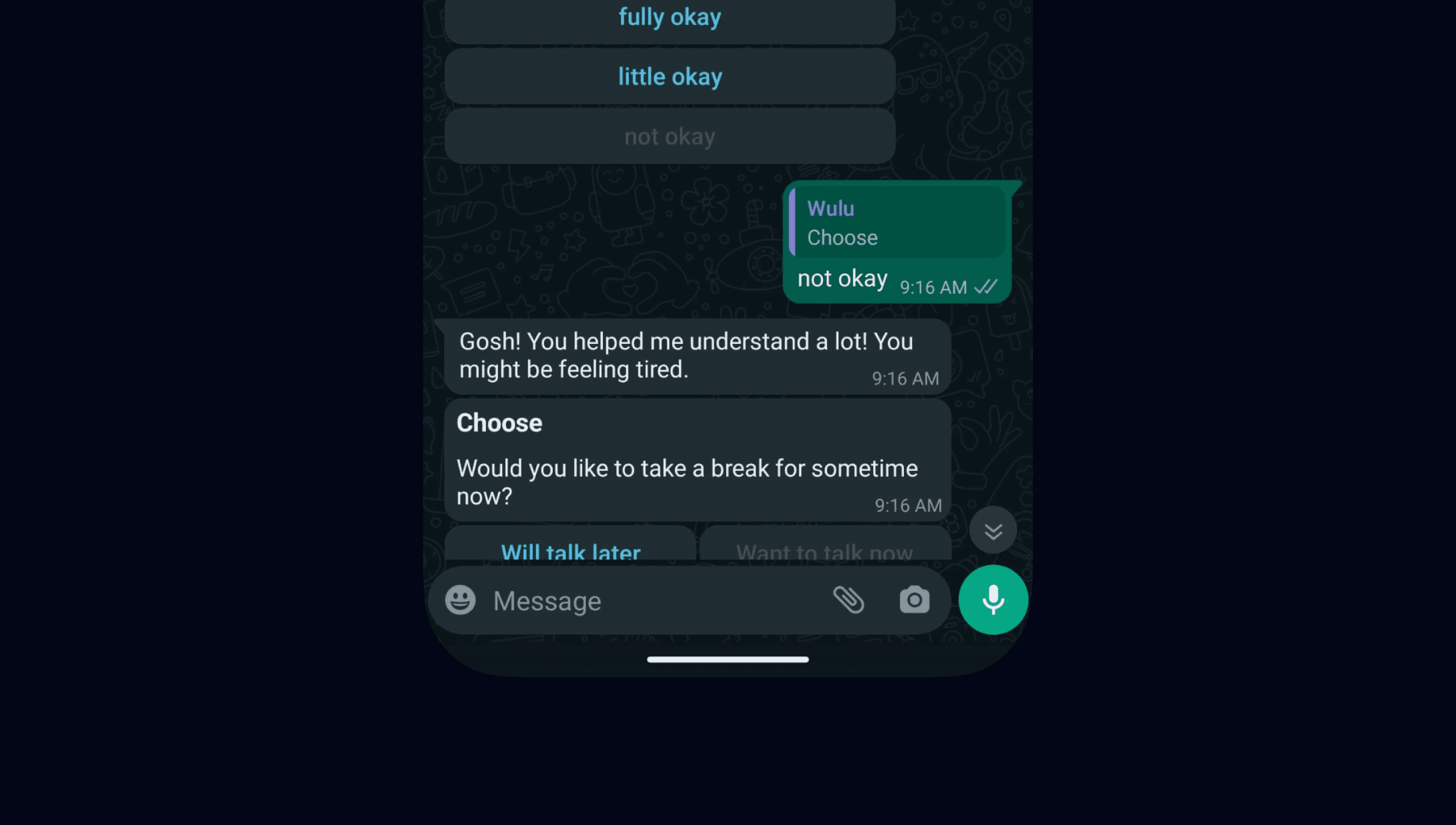
Support for sensitive conversations
The framework considered emotion checks, low-pressure breaks, and safer handling of sensitive topics.
IMPACT
Improved attitudes towards gender by 13% through a RCT with 1500 adolescents
In a 2 week study for 14-18 year old adolescents in urban poor areas of Delhi, India
I learnt to not differentiate between girls and boys. Girls can also do the same work as boys and have the same capability.
Anonymous participant
I learn what bullying is. I was being a bully to my friends. I have stopped now.
Anonymous participant
PROXY METRICS FOR ENGAGEMENT AND RETENTION
Bounce rate < 40%
Tracking number of sessions on website and chatbot
Drop-off <30%
Tracking the number of users who reached the end of each module in the user journey
Pre-post study questionnaires
Focus Group Discussions post RCT
QUANTITATIVE ANALYSIS OF METRICS
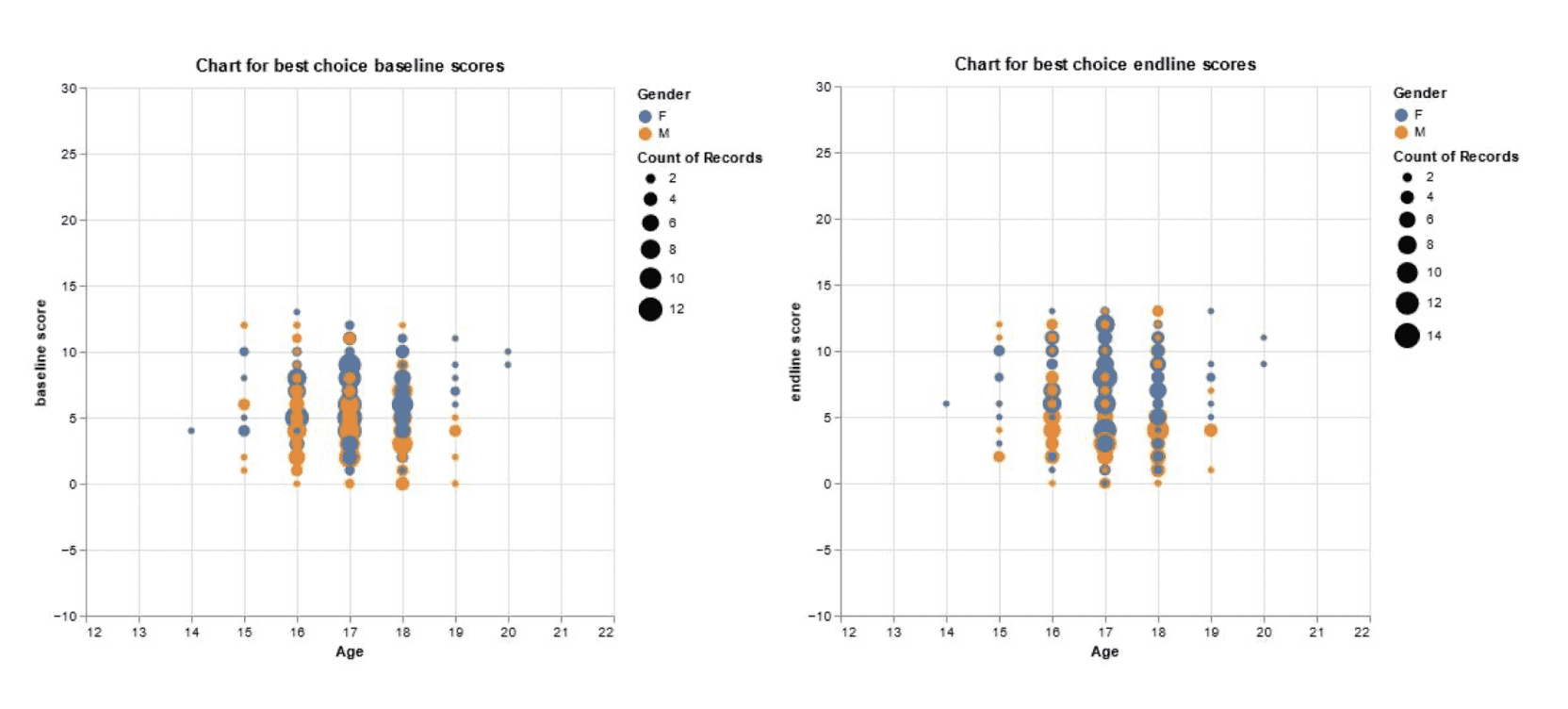
In a 14-day period, there was a 12.58% change in total scores in the treatment group. Overall, the change in attitude for girls was 14.79% and for boys was 9.42%. Girls showed higher change than boys by 5.37% points.
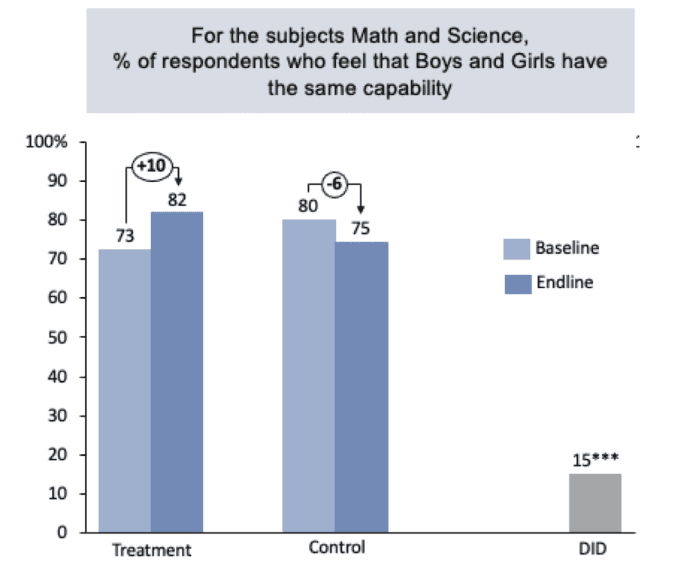
Statistically significant results were obtained by measuring scores on questionnaires given before and after using the chatbot, for control and treatment groups.
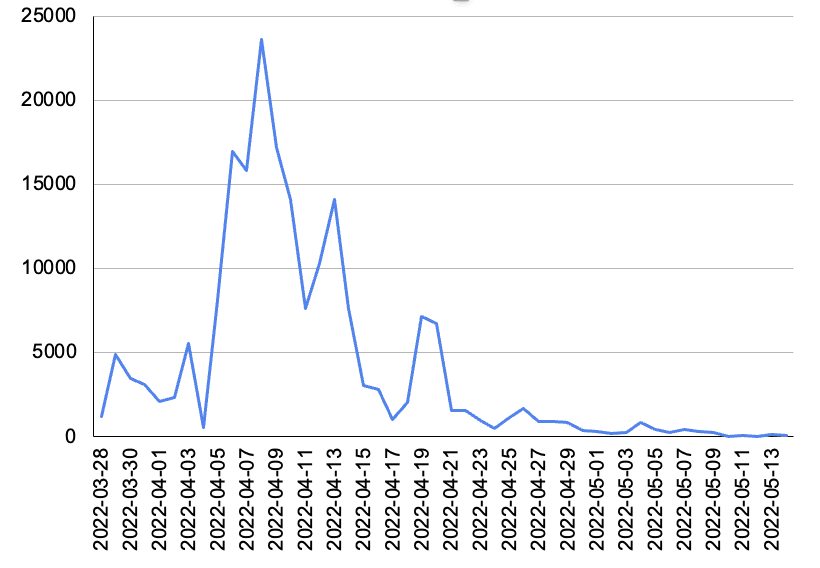
Drop-off rate was <20%. Nudges through SMS and Whatsapp messages brought back users the next day.
CHALLENGES IN THIS DOMAIN
Unfamiliar and sensitive conversations had to be made easier to access, return to, and engage with.
These challenges surfaced through prototyping across website widgets, Whatsapp flows, AI-based conversation builders, and content delivery formats.
Designing for users with low familiarity with web products
Designing AI-driven bot behavior for unexpected user inputs
Creating content that matched actual consumption habits
Building for Indian language, naming, and spelling patterns
Choosing platforms that fit real access conditions
Handling sensitive content with the right level of care
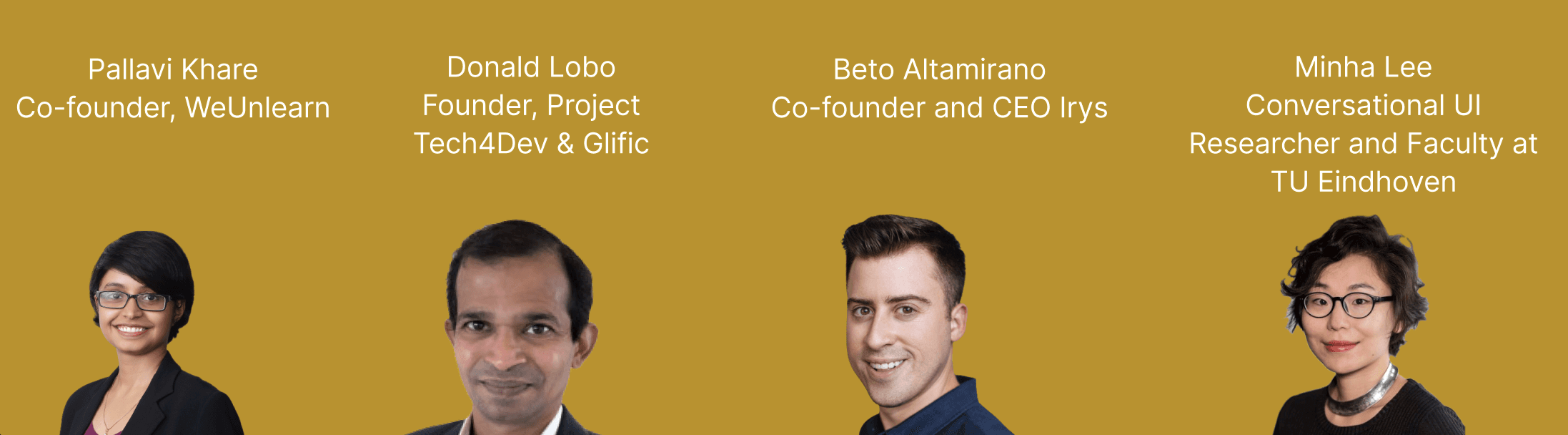
I also conducted interviews with Conversational UI experts to understand conversational design.
Talking to SaaS providers and industry practitioners with remote work experience additionally helped me establish processes to build trust and efficiency in my team during the pandemic.
PROTOTYPING WITH AND WITHOUT AI
A semi-structured AI conversational agent with a human-in-the-loop that worked better by becoming less open-ended.
Less AI
More reliability with structured flows
Less text
More engagement with short-form multimedia
Familiar platforms
Higher retention with Whatsapp, and human or CMS support for tracking and intervention
Use AI selectively for broad navigation, while keeping sub-flows narrow, guided, and rule-based.
NLP models from Rasa struggled with Indian names, spelling variation, and unexpected turns in conversation.
Reduce open-ended interactions where needed, disable media sharing, and make the interaction model clearer.
Users sent personal information, media, and messages outside the expected flow. Some perceived the avatar as a real person.
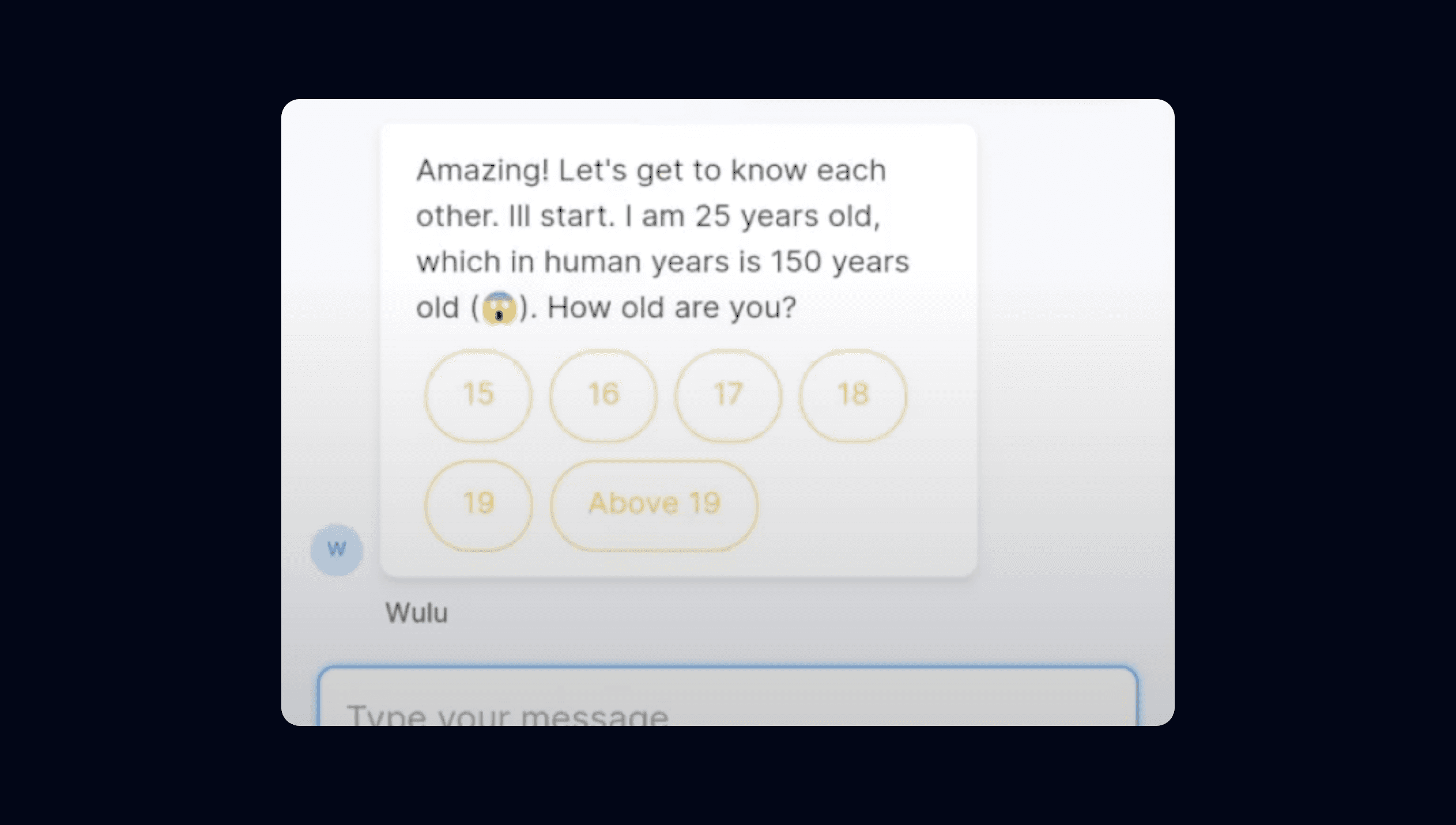
Shift toward short videos, images, memes, and mostly yes-or-no or multiple-choice interactions.
Long-form English content was harder to consume and less aligned with familiar media behavior.
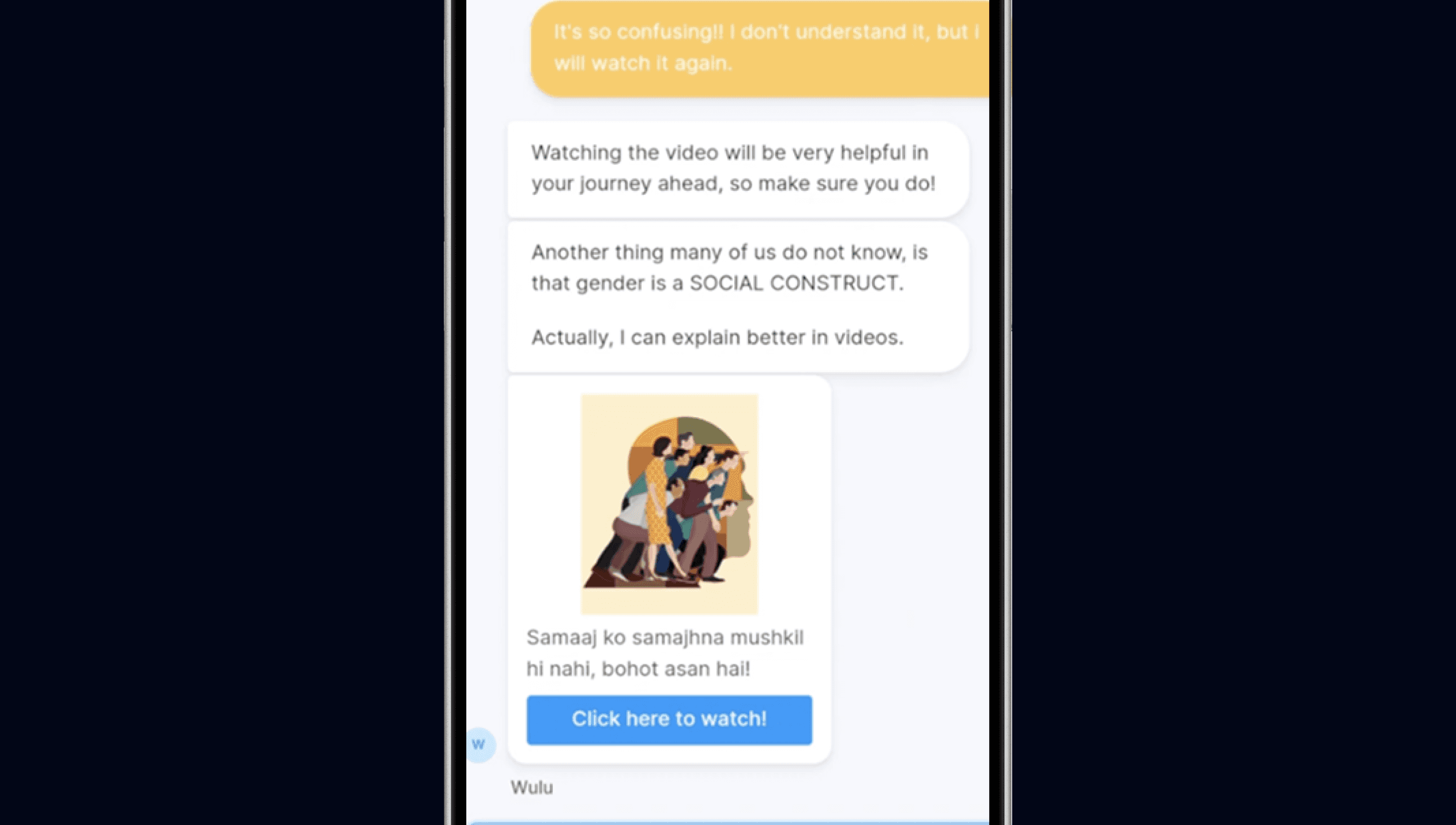
Use Whatsapp for continuity, re-engagement nudges, and lower-friction return behavior.
Shared phones, weak internet, and repeated login friction made website-only delivery weaker than expected.
Connect the chatbot to a customer service or CMS layer to track flows, monitor progress, and support human intervention.
The team also needed visibility into where users dropped, misunderstood content, or needed intervention.
CONTENT AND DESIGN FRAMEWORK
Reducing effort without reducing care
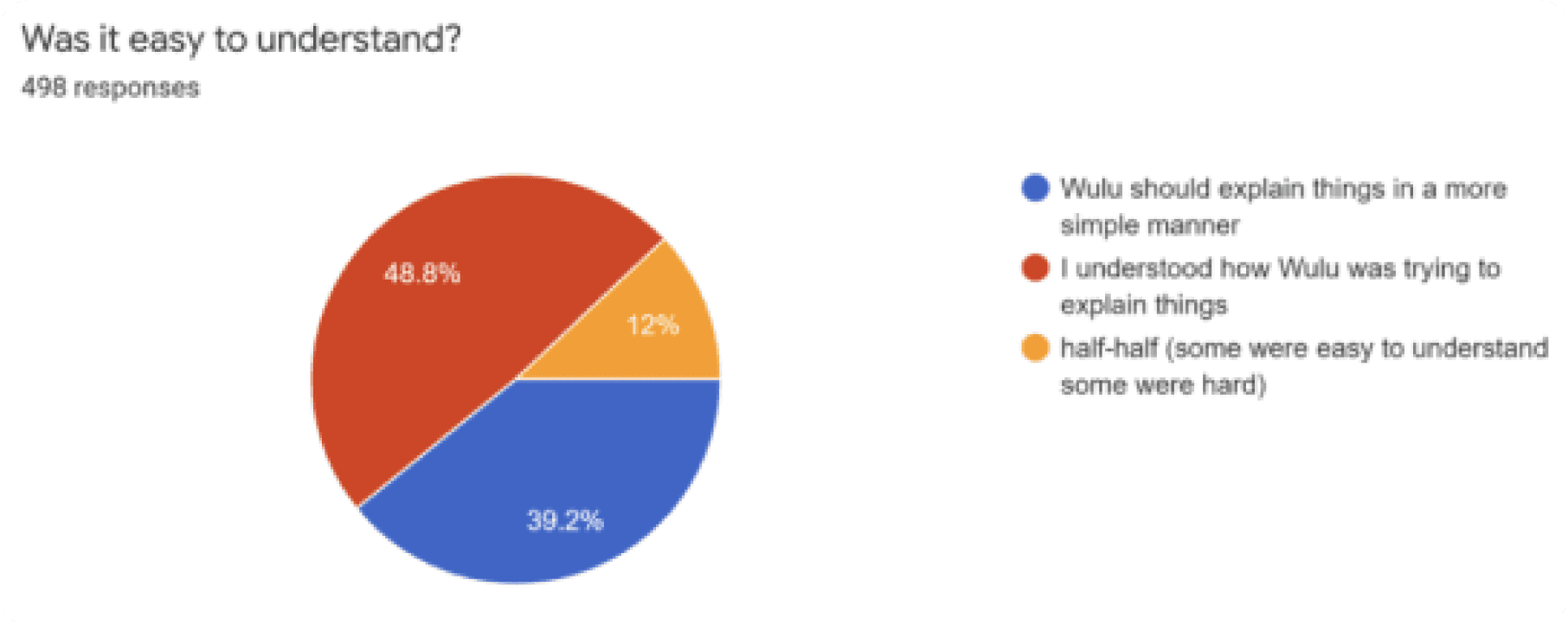
The experiences were grounded in behavioral sciences to ensure educational content led to change in attitudes.
Quick understanding checks
Short checkpoint questions were used to see whether users were following the content.
Timed nudges
Reminders were designed around moments when users were more likely to re-engage.
Low-bandwidth content choices
Lighter-weight media and simpler formats helped reduce data usage of adolescents. They often shared a single phone across a family and it was important to not use up their quota.
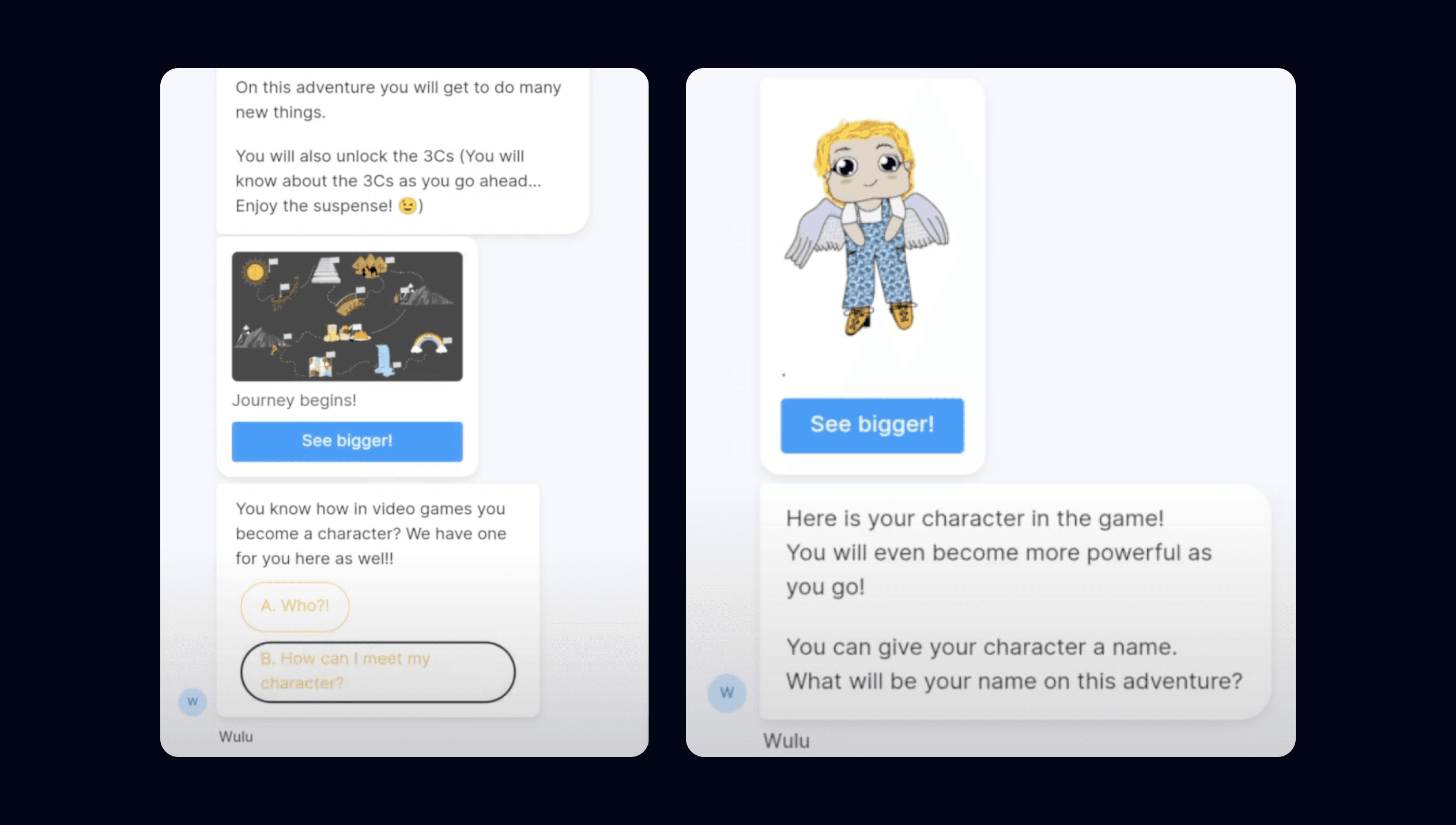
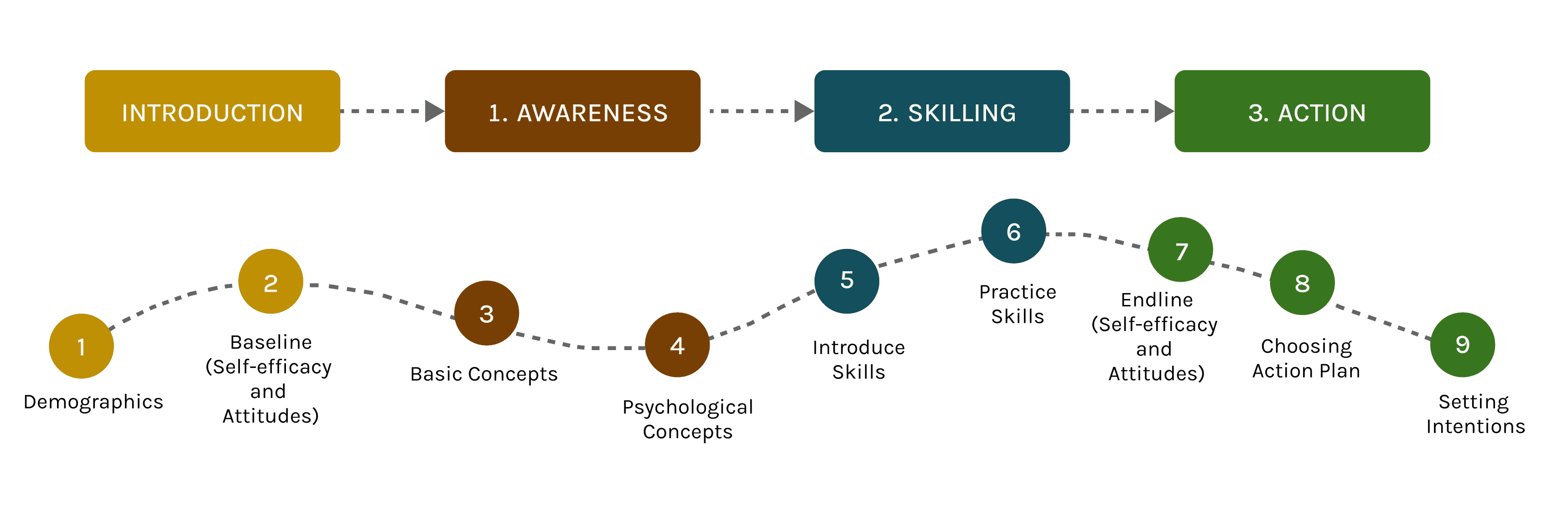
Gamified structure
Avatars, a sense of journey, and progression cues made learning feel more approachable.